Imagine… heading out to watch belugas and, after passing by a cliff, a cape, and a lookout, seeing the St. Lawrence River and the Saguenay Fjord stretch out before your eyes. Around you, scientists are getting to work. Hydrophones are dropped into the water and drones are launched to study the belugas’ acoustic universe and their behaviour. The images and sounds captured by these devices are shared between the network's observation sites. Naturalists invite you to discover belugas a little differently.
Parc national du Fjord-du-Saguenay, secteur Baie-Sainte-Marguerite à Sacré-Coeur


Shore-based beluga watching
Research project: Study on social and acoustic behaviour
Interpretive activity: sharing and interpretation of images and sounds
Partner of site: Sépaq
Putep ‘t-awt Beluga observation site in Cacouna
Shore-based beluga watching
Research project: Study on social and acoustic behaviour
Interpretive activity: sharing and interpretation of images and sounds
Partners of site: PNWW and ROMM
Marine Mammal Interpretation Centre
Interpretive activity: sharing and interpretation of images and sounds
Partner of site: GREMM
GREMM research vessel
Research project: Study on social and acoustic behaviour
Partner : GREMM
Baie-Sainte-Catherine

Shore-based beluga watching
Presentation of Window on Belugas network
Partner of site: Parcs Canada
Kamouraska

Research project: capture and streaming of aerial imagery
Partners : GREMM and Parcs Canada
From the Halte du Béluga, spy on belugas and their fascinating society!
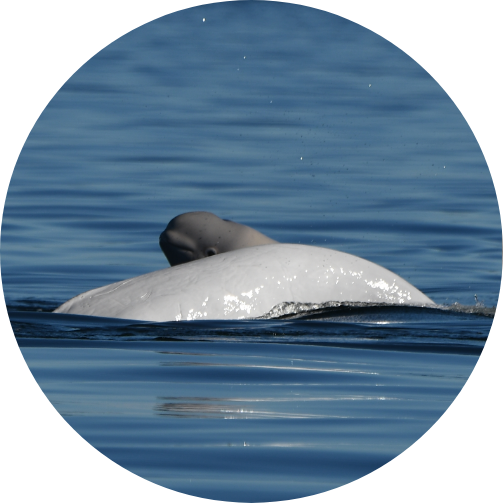
In the warm shallow waters of Baie Sainte-Marguerite, female belugas of the Saguenay community gather to care for their young, socialize and feed. Sometimes groups of males get in on the action, too!
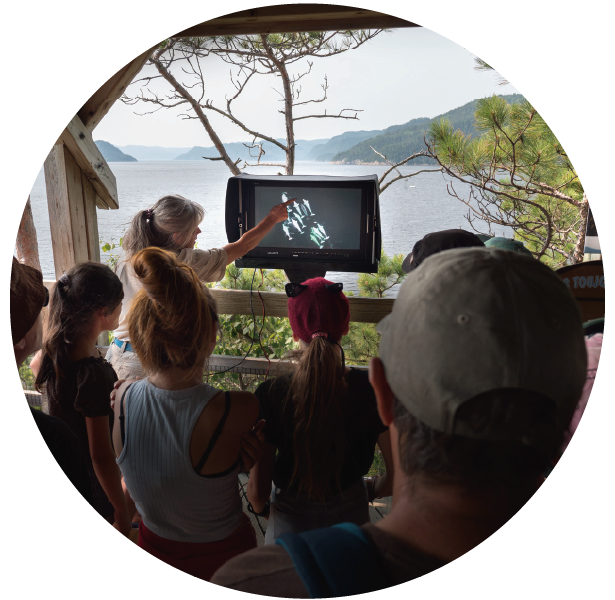
Baie Sainte-Marguerite is a prime location to study beluga behaviour and observe these animals in their natural habitat! During your visit, naturalists from Fjord-du-Saguenay National Park share images and sounds captured by the beluga brigades with the public.
This is a unique opportunity to see and hear belugas… without disturbing them!
Plan your visit*It should be noted that under Canada’s Marine Mammal Regulations and the Marine Activities in the Saguenay–St. Lawrence Marine Park Regulations, it is strictly prohibited to operate drones above marine mammals or anywhere in the Saguenay–St. Lawrence Marine Park. GREMM is issued permits for its research activities from Fisheries and Oceans Canada, Parks Canada and Sépaq.
From the top of Cacouna mountain, discover the rich and complex social lives of belugas!
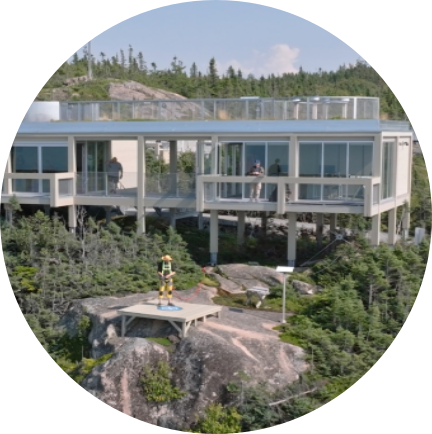
The observation site in Cacouna, Putep ‘t-awt, overlooks one of the beluga’s more important habitats. Herds of females from the South Shore community, together with their young and groups of juveniles, come and go with the tides. These belugas hunt, socialize and care for their offspring.
This is a prime location to study their social lives!
Naturalists from the Marine Mammal Observation Network (MMON) share the images and sounds captured by the beluga brigades with the public.
This is a unique opportunity to see and hear belugas… in a rather unconventional way!
Plan your visit
*It should be noted that under Canada’s Marine Mammal Regulations and the Marine Activities in the Saguenay–St. Lawrence Marine Park Regulations, it is strictly prohibited to operate drones above marine mammals or anywhere in the Saguenay–St. Lawrence Marine Park. GREMM is issued permits for its research activities from Fisheries and Oceans Canada, Parks Canada and Sépaq.
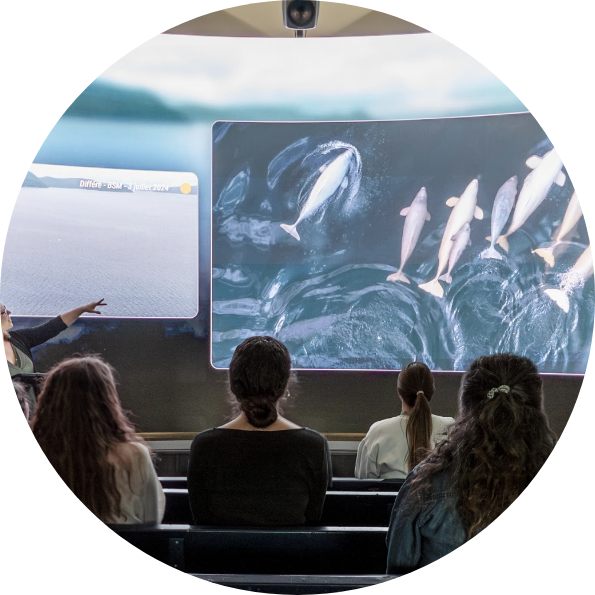
Visit the Window on Belugas headquarters!
Based in Tadoussac, CIMM houses the research station of the Group for Research and Education on Marine Mammals (GREMM). It is here that the images and sounds captured by the beluga brigades are received and analyzed.
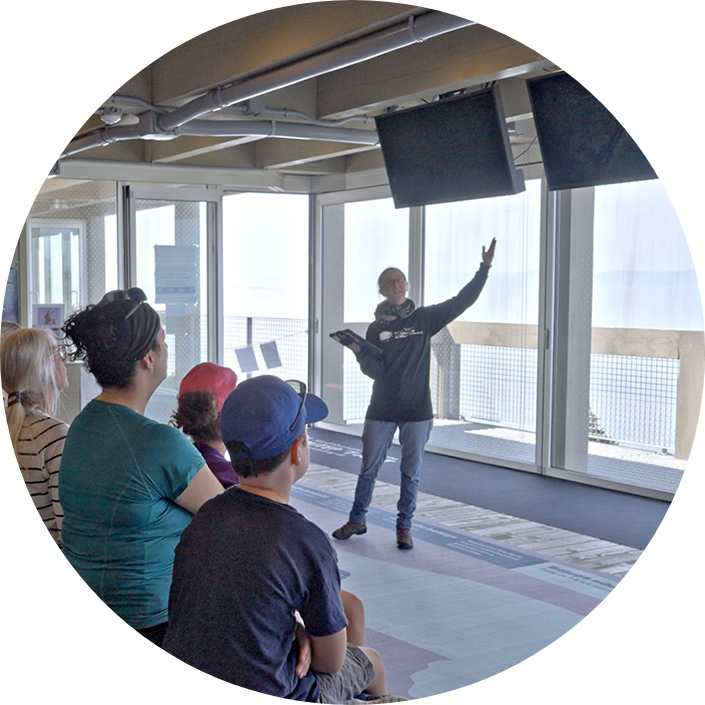
In the virtual reality auditorium, not far from the digital lab, the journey covers the entire estuary! Whether it’s on board the research vessel Antarès, at the Halte du Béluga in Baie Sainte-Marguerite, or at Putep ‘t-awt in Cacouna, the brigades will show you the different communities of St. Lawrence belugas that make up the St. Lawrence Estuary population.
GREMM’s naturalists invite you to a virtual visit of the Window on Belugas network of interconnected sites, where they will share stories about these animals with you.
This is a unique opportunity to see and hear belugas… from a scientist’s perspective!
Plan your visit*It should be noted that under Canada’s Marine Mammal Regulations and the Marine Activities in the Saguenay–St. Lawrence Marine Park Regulations, it is strictly prohibited to operate drones above marine mammals or anywhere in the Saguenay–St. Lawrence Marine Park. GREMM is issued permits for its research activities from Fisheries and Oceans Canada, Parks Canada and Sépaq.
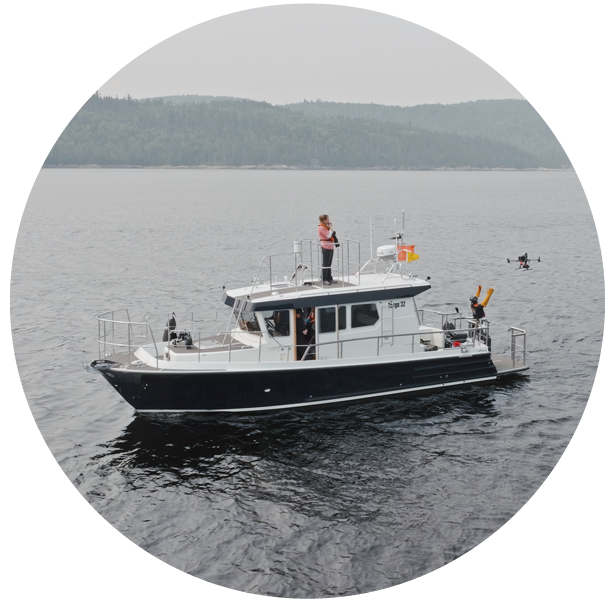
Observe belugas at sea through the lens of a scientist!
Antarès is GREMM’s dedicated research vessel for studying beluga behaviour and monitoring the animals’ health.
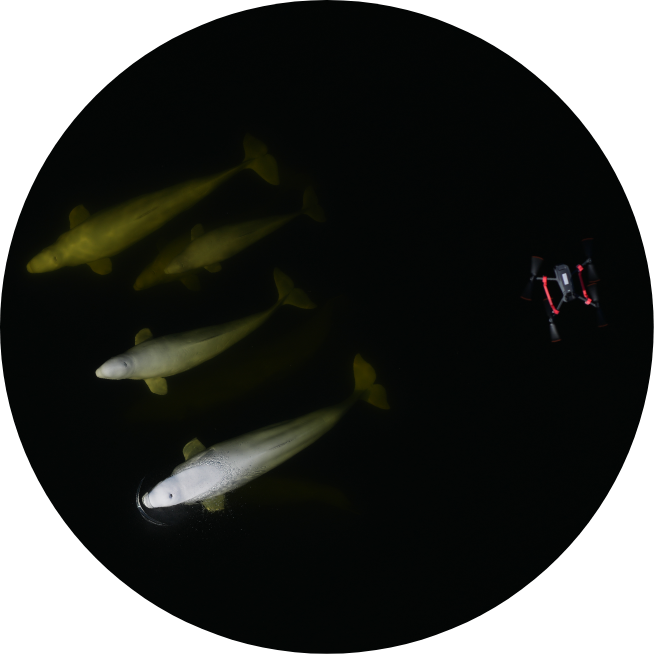
Day in and day out, the beluga brigade on board Antarès captures images and sounds with drones and hydrophones to study the beluga herds encountered in the St. Lawrence and the Saguenay. These data offer a more complete understanding of the lives and needs of belugas throughout their habitat.
In addition to being used for scientific purposes, these data are forwarded to each of the sites in the Window on Belugas network: CIMM, Putep ‘t-awt, and soon the Halte du Béluga!
Plan your visit*It should be noted that under Canada’s Marine Mammal Regulations and the Marine Activities in the Saguenay–St. Lawrence Marine Park Regulations, it is strictly prohibited to operate drones above marine mammals or anywhere in the Saguenay–St. Lawrence Marine Park. GREMM is issued permits for its research activities from Fisheries and Oceans Canada, Parks Canada and Sépaq.
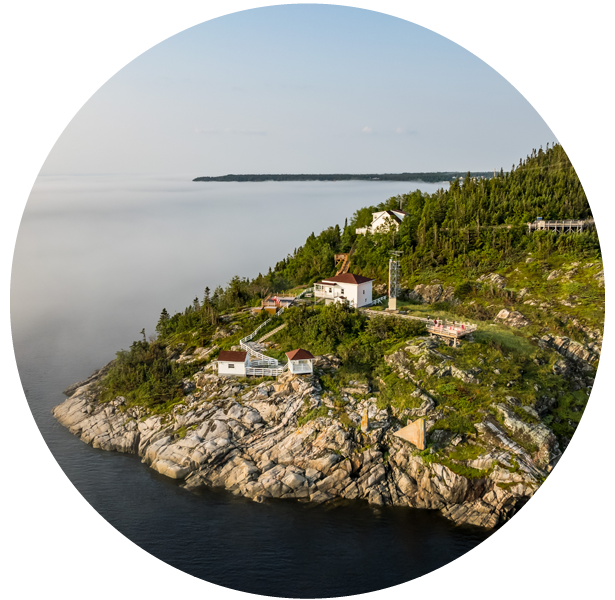
Pointe-Noire: Gateway to beluga habitat!
The confluence of the Saguenay Fjord and the St. Lawrence River marks the birthplace of the Window on Belugas project.
Indeed, Pointe-Noire has a long history of beluga research. It was on these rocks that the first photographs ever used to identify individuals were taken. These photos notably played a role in sounding the alarm about the plight of the St. Lawrence beluga.
The Pointe-Noire lighthouse is a land-based observation platform of Parks Canada where belugas can be seen swimming in and out of the Saguenay Fjord.
To plan your visit*It should be noted that under Canada’s Marine Mammal Regulations and the Marine Activities in the Saguenay–St. Lawrence Marine Park Regulations, it is strictly prohibited to operate drones above marine mammals or anywhere in the Saguenay–St. Lawrence Marine Park. GREMM is issued permits for its research activities from Fisheries and Oceans Canada, Parks Canada and Sépaq.
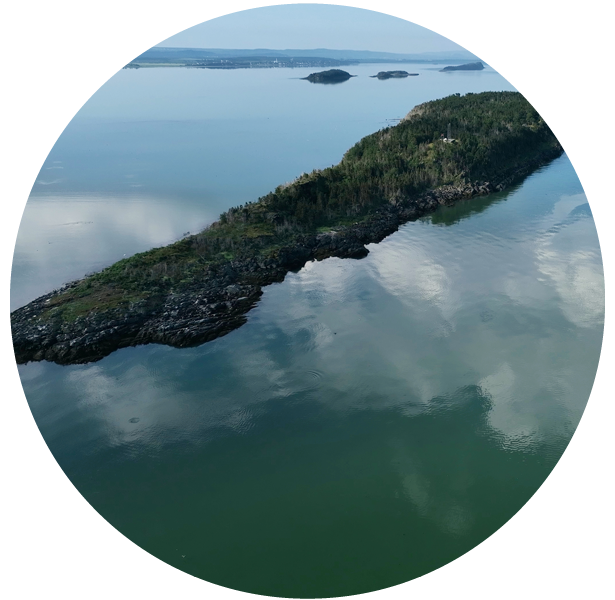
Peer in on the upstream female community!
All around the islands off the coast of Kamouraska, small groups of belugas gather to feed, socialize and care for their young.
This is an ideal location to study beluga vocalizations and behaviour!
As part of the Window on Belugas activity, the data collected at this site are forwarded to each of the partner sites.
*It should be noted that under Canada’s Marine Mammal Regulations and the Marine Activities in the Saguenay–St. Lawrence Marine Park Regulations, it is strictly prohibited to operate drones above marine mammals or anywhere in the Saguenay–St. Lawrence Marine Park. GREMM is issued permits for its research activities from Fisheries and Oceans Canada, Parks Canada and Sépaq.
Window on Belugas is an interpretive activity offered at four observation sites in three different tourism regions bordering the Saguenay–St. Lawrence Marine Park. Players from the tourism, research and conservation sectors in these regions have teamed up to offer a new experience that aims to put visitors in the shoes of scientists who use drones and hydrophones to study belugas.
Thanks to satellite communication, images and sound recordings are live-streamed to each of the sites that make up the network. The experience brings visitors face to face with belugas throughout the Saguenay and the St. Lawrence Estuary.
Window on Belugas proposes an alternative to whale watching at sea, namely a means of discovering belugas without disturbing them.
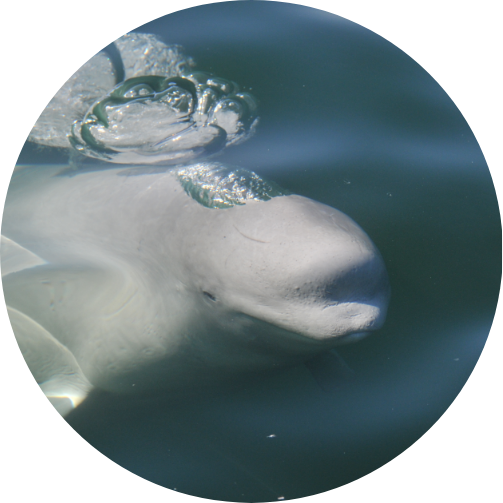
One of Quebec’s most emblematic animals, the St. Lawrence beluga is endangered. A better understanding of these creatures and increased awareness of their fascinating universe are the best guarantees for their future.

Belugas spend a significant portion of their lives below the surface, far from the watchful eyes of observers. Aerial imagery and underwater sound recording have added a new dimension to beluga research.
Across the species’ range, research teams study the relationships between mothers and their calves and the correlation between the animals’ social and acoustic behaviours.
By acquiring a more intimate knowledge of beluga behaviour, scientists are attempting to better understand the nature and functions of their social groups as well as how they use their habitat. The objective is to better understand beluga society and culture.
Window on Belugas is part of the St. Lawrence Beluga Project.

The survival of belugas and the protection of their habitat are contingent on the value that we place on them.